


















Can a laser remove a canker sore instantly?
No. Laser treatment may reduce pain and support the healing process, but the ulcer still heals biologically over time.

Are canker sores contagious?
Typical aphthous ulcers are not contagious. Other oral sores can have different causes, which is why the appearance and history matter.

When should a sore be checked?
A lesion that is unusually large, very painful, recurrent, worsening, associated with systemic symptoms, or not healing as expected should be evaluated.

Can the sore come back?
Yes. Treatment of one ulcer does not prevent every future canker sore. Recurrent ulcers may warrant a discussion about triggers or underlying conditions.
FIRST CONFIRM WHAT THE SORE IS
Not every painful spot in the mouth is a canker sore.
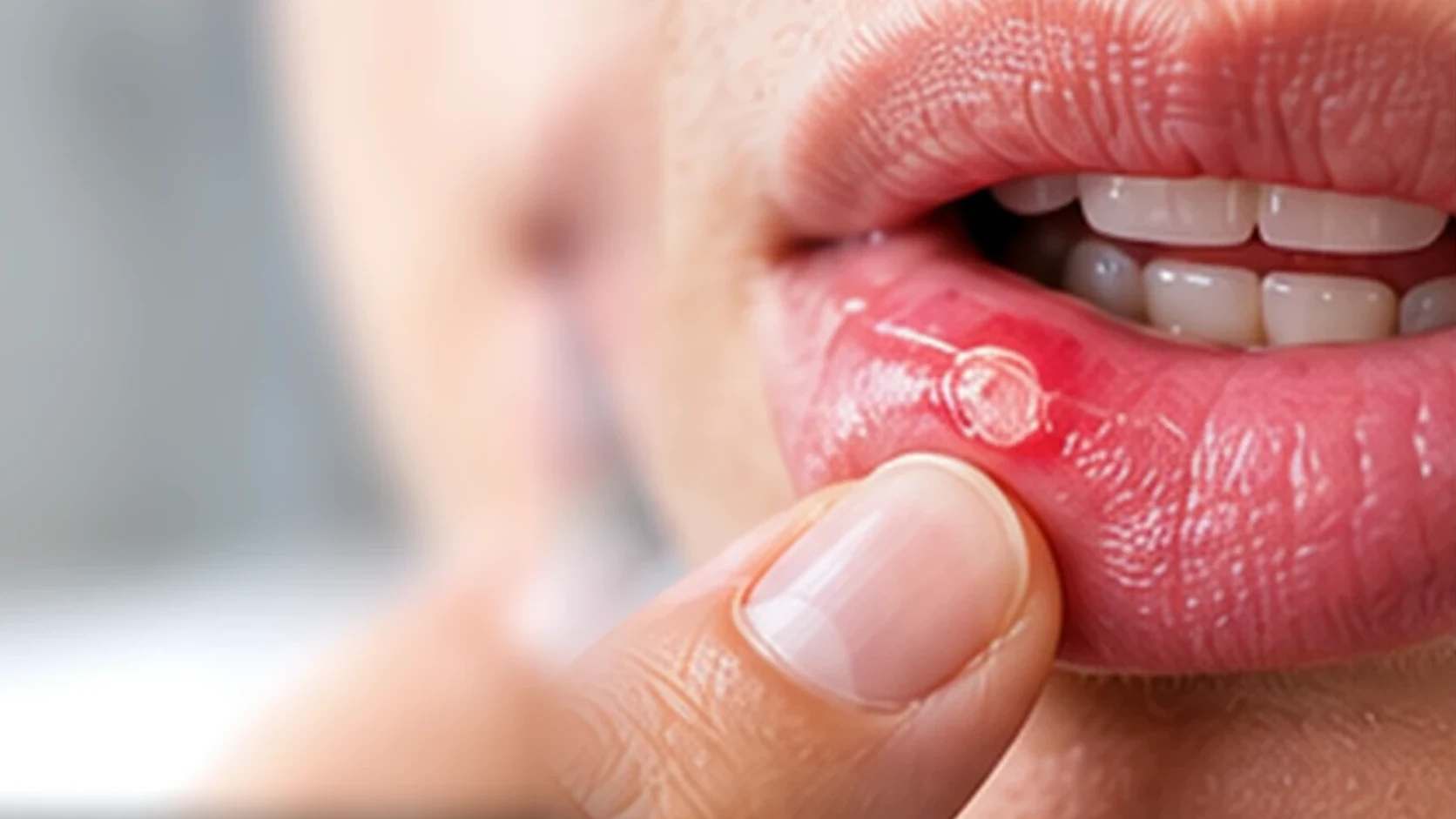
Typical aphthous ulcers are shallow, round or oval sores that develop on non-keratinized oral tissues such as the inner lip, cheek or underside of the tongue. Trauma, viral lesions, dental infection, immune conditions and other oral diseases can look or feel different.
We examine the lesion and history before treating it as a routine canker sore, especially when the pattern is persistent or atypical.
HOW TREATMENT CAN HELP
Goals of canker-sore care
Reduce pain
Laser treatment may provide rapid symptom relief in selected aphthous ulcers by treating the lesion surface and surrounding tissue.
Support comfortable eating and speaking
Reducing local irritation can make daily function easier while the ulcer heals.
Protect against repeated trauma
If a sharp tooth, appliance or habit is repeatedly traumatizing the area, correcting the irritant may be more important than treating the ulcer alone.
Identify recurrent patterns
Frequent or severe ulcers can sometimes be associated with stress, nutritional issues, medications or systemic conditions and may warrant further evaluation.
Distinguish other lesions
A sore that is not typical for aphthous ulceration should be diagnosed before repeated empiric treatment.
Coordinate referral when needed
Persistent, unusual or suspicious lesions may need biopsy, oral surgery or medical evaluation.
Relief is the goal—not “burning off” the ulcer.
Laser care can be a useful comfort measure, but persistent or atypical oral lesions should not be repeatedly treated without establishing what they are.
WHEN A SORE NEEDS MORE THAN ROUTINE RELIEF
Features that change the treatment plan
We consider where the lesion is located, how long it has been present, whether it has recurred, what it looks and feels like, whether there was trauma, and whether other symptoms are present. Atypical lesions may need a different diagnosis, biopsy or referral.
Prompt evaluation is important when you notice
- A sore that does not heal within the expected period
- A lesion that is hard, irregular, enlarging or repeatedly bleeding
- Persistent white, red or mixed-color tissue changes
- Unexplained numbness, swelling or a neck lump
- Fever, widespread oral lesions or significant systemic symptoms
WHAT A VISIT MAY INCLUDE
A simple, diagnosis-first approach
01 — Examine the lesion
Confirm whether the location, appearance and history are consistent with a typical canker sore.
02 — Identify irritants or triggers
Look for trauma, sharp edges, appliances, recurrent patterns or other factors that may be contributing.
03 — Provide symptom relief
Laser treatment or other local measures may be used when appropriate to reduce discomfort.
04 — Reassess if it does not heal
Persistent or changing lesions are reevaluated rather than repeatedly treated as routine aphthous ulcers.
HELP THE AREA HEAL
Practical care after treatment
Avoid irritating foods
Very spicy, acidic, sharp or hot foods may increase discomfort while the area heals.
Keep the mouth clean gently
Continue oral hygiene without aggressively brushing the ulcer.
Use recommended topical care only
Follow the specific products or rinses recommended for your lesion rather than layering multiple irritants on the area.
Watch the timeline
If the sore does not improve as expected or changes in appearance, contact the office for reassessment.
INSURANCE & FINANCIAL PLANNING
Know the plan before treatment begins.
We accept your insurance and will help you maximize your benefits. Coverage varies by plan, diagnosis and procedure. Our team can review expected fees, available benefits and payment or financing options before treatment begins.
Treatment recommendations are based on clinical need, not on whether a particular service is covered.
CARE CLOSE TO HOME
Choose the Bright Smiles location that works best for you.
Specific provider, technology and appointment availability can be confirmed when you schedule.
Lawrenceville
845 Scenic Hwy S, Suite 300, Lawrenceville, GA 30046
Dawsonville
78 Dawson Village Way N, Suite 170, Dawsonville, GA 30534
START WITH AN EVALUATION
Talk with Bright Smiles about canker sore treatment.
Use the location links to schedule directly. The appropriate treatment is confirmed only after clinical evaluation.
Submitting an online booking request starts the scheduling process; treatment recommendations are made after evaluation.
FREQUENTLY ASKED QUESTIONS
Canker Sore Treatment questions patients ask
The right treatment depends on the individual diagnosis and clinical findings.
What causes canker sores?
The exact cause can vary. Triggers may include minor trauma, stress, nutritional factors, immune response, hormonal changes or certain systemic conditions.
Are canker sores the same as cold sores?
No. Typical canker sores occur inside the mouth and are not caused by the herpes simplex virus. Cold sores usually affect the lip border or nearby skin and are contagious.
How does laser treatment help?
In selected lesions, controlled laser energy can reduce local discomfort and may support the healing environment without physically cutting out the ulcer.
Will the sore disappear immediately after laser treatment?
No. Pain may improve quickly, but the tissue still needs time to heal.
Can I get laser treatment every time I have a canker sore?
Possibly, but frequent or severe recurrence should also prompt discussion of triggers or underlying conditions rather than repeated treatment alone.
Should a canker sore be biopsied?
A typical, short-lived aphthous ulcer usually does not require biopsy. A persistent, atypical or suspicious lesion may need biopsy or referral.
Can children have canker sores treated?
Yes, but treatment depends on age, cooperation, diagnosis and the severity of symptoms.
Can stress cause canker sores?
Stress is a commonly reported trigger for some people, although it is not the only possible factor.
What if a sore is caused by a sharp tooth?
The irritant should be addressed. Repeated trauma can keep tissue from healing even if the sore itself is treated.
Does insurance cover laser canker-sore treatment?
Coverage varies. We accept your insurance and will help you maximize your benefits while explaining expected costs before treatment.
BRIGHT SMILES DENTISTRY & ORTHODONTICS
A typical canker sore is usually self-limited, but treatment can make the healing period more comfortable. If the lesion is unusual or persistent, diagnosis comes first.
Serving Cumming, Lawrenceville and Dawsonville, Georgia.