












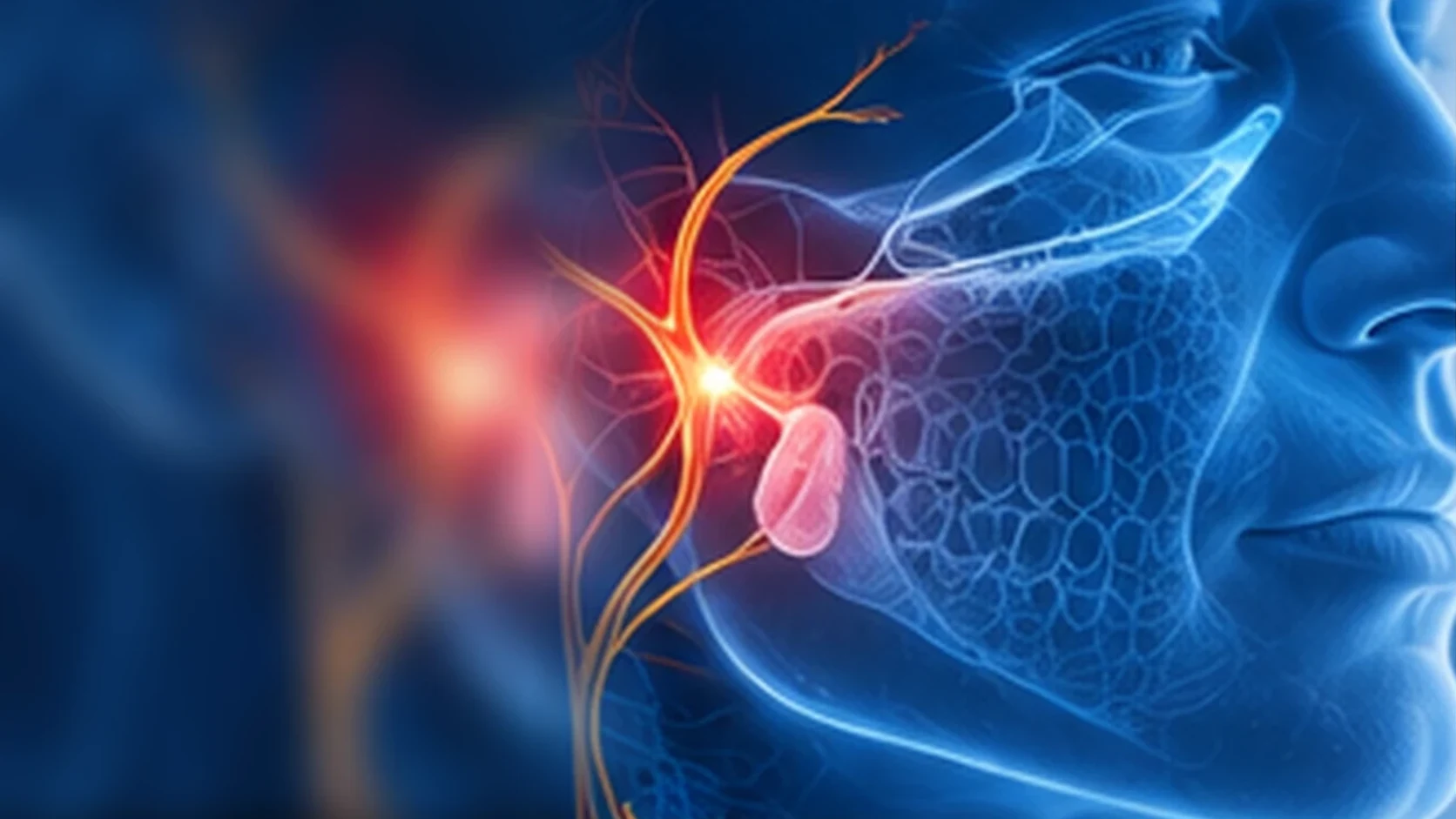

What dental nerves are commonly involved?
Symptoms may involve branches of the trigeminal nerve, including the inferior alveolar, mental or lingual nerves, depending on the dental procedure or injury.

Can a nerve heal on its own?
Some nerve injuries improve spontaneously, while others recover only partially or may require specialist management. The pattern and timing of recovery matter.

What can PBM realistically do?
PBM is intended as an adjunct that may support cellular recovery and symptom modulation. Evidence and response vary, so it should not be presented as guaranteed nerve regeneration.

When is referral important?
Severe, complete, worsening or persistent deficits—and injuries with known high-risk mechanisms—may need prompt evaluation by an oral and maxillofacial surgeon or another appropriate specialist.
NERVE INJURY IS A SPECTRUM
The same word—“numbness”—can represent very different injuries.
A nerve can be compressed, stretched, inflamed, partially injured or more severely disrupted. Sensation can also become painful rather than absent. The prognosis and treatment priorities differ across those patterns.
We focus on documenting what the patient can and cannot feel, how the area changes over time, what procedure or event preceded the symptoms and whether specialist input is needed.
WHEN PBM MAY BE PART OF CARE
Supportive use after appropriate evaluation
Post-extraction sensory change
Altered sensation after lower wisdom-tooth or other oral surgery may be monitored and treated supportively when appropriate.
Implant-related nerve irritation
If symptoms occur after implant surgery, the implant position and urgency of intervention must be evaluated; PBM does not replace that assessment.
Lingual nerve symptoms
Tongue numbness, tingling or taste-related complaints after dental procedures may require careful documentation and specialist referral depending on severity.
Traumatic nerve irritation
Blunt or surgical trauma can produce temporary or longer-lasting sensory changes.
Neuropathic discomfort
Burning, tingling or electric-shock sensations may reflect neuropathic involvement and should be distinguished from ordinary postoperative soreness.
Recovery follow-up
Serial sensory mapping can help determine whether the involved territory is improving, stable or worsening.
Time matters more than optimism.
When a significant nerve injury is possible, the priority is early documentation and appropriate referral. PBM can be supportive, but it should never delay a time-sensitive surgical or specialist evaluation.
DOCUMENT THE DEFICIT
How nerve-related symptoms are assessed
We review the procedure and onset, map the affected territory, compare sensory responses, check for motor findings or infection, review relevant imaging and document changes at follow-up. When the pattern suggests a higher-grade injury, referral is discussed promptly.
Higher-concern findings include
- Complete anesthesia in a clear nerve distribution
- Progressively enlarging numb area
- Severe dysesthesia, allodynia or electric-shock pain
- Motor weakness or other neurologic findings
- Imaging or procedural history suggesting direct nerve injury or compression
A STRUCTURED FOLLOW-UP PLAN
How PBM fits into nerve-injury care
01 — Baseline sensory exam
Define the affected nerve territory and severity as clearly as possible.
02 — Identify referral needs
Decide whether urgent imaging, surgical review or another specialist opinion should take priority.
03 — Adjunctive PBM
When appropriate, low-level light therapy is delivered using a planned protocol while other indicated care proceeds.
04 — Serial reassessment
Objective and subjective changes are tracked over time so the treatment plan can respond to the actual recovery pattern.
PROTECT AND MONITOR
What patients can do between visits
Protect areas with reduced sensation
Avoid biting, thermal burns and unnoticed trauma to numb lip, cheek or tongue tissue.
Describe the quality of sensation
Numbness, tingling, burning and hypersensitivity are different symptoms and should be reported specifically.
Keep referral appointments
Specialist timing can matter. Do not postpone a recommended consultation because PBM has started.
Expect recovery to be variable
Improvement can be gradual and incomplete. Treatment decisions should be based on documented change, not promises.
INSURANCE & FINANCIAL PLANNING
Know the plan before treatment begins.
We accept your insurance and will help you maximize your benefits. Coverage varies by plan, diagnosis and procedure. Our team can review expected fees, available benefits and payment or financing options before treatment begins.
Treatment recommendations are based on clinical need, not on whether a particular service is covered.
CARE CLOSE TO HOME
Choose the Bright Smiles location that works best for you.
Specific provider, technology and appointment availability can be confirmed when you schedule.
Lawrenceville
845 Scenic Hwy S, Suite 300, Lawrenceville, GA 30046
Dawsonville
78 Dawson Village Way N, Suite 170, Dawsonville, GA 30534
START WITH AN EVALUATION
Talk with Bright Smiles about photobiomodulation for nerve injury / altered sensation.
Use the location links to schedule directly. The appropriate treatment is confirmed only after clinical evaluation.
Submitting an online booking request starts the scheduling process; treatment recommendations are made after evaluation.
FREQUENTLY ASKED QUESTIONS
Photobiomodulation for Nerve Injury / Altered Sensation questions patients ask
The right treatment depends on the individual diagnosis and clinical findings.
What is a dental nerve injury?
It is damage or irritation to a sensory nerve associated with dental treatment, surgery, trauma or nearby inflammation.
What is paresthesia?
Paresthesia is an abnormal sensation such as tingling, pins-and-needles or partial numbness. Dysesthesia refers to an unpleasant abnormal sensation, such as burning.
Can nerve injuries happen after wisdom-tooth removal?
Yes. Lower wisdom teeth can be close to the inferior alveolar or lingual nerves, so altered sensation is a recognized risk even with careful treatment.
Can implants affect nerves?
Implants placed near nerve canals can irritate or injure nerves. New sensory changes after implant surgery require prompt assessment.
Does PBM repair the nerve?
PBM is used to support biologic recovery and symptom modulation in selected cases, but it cannot be promised to repair a nerve or restore normal sensation.
When should I see an oral surgeon?
Prompt specialist evaluation is appropriate for severe, complete, worsening or persistent deficits, or when the procedure or imaging suggests direct nerve injury.
How long does nerve recovery take?
It varies widely with injury severity. Some sensory changes improve over weeks to months; others may persist or recover incompletely.
Can tingling be a good sign?
Changing sensation can occur during recovery, but tingling alone does not guarantee a favorable outcome.
What if the numbness is painful?
Burning, electric-shock or touch-evoked pain can indicate neuropathic involvement and should be evaluated rather than treated as ordinary soreness.
Does insurance cover PBM or nerve-injury follow-up?
Coverage varies. We accept your insurance and will help you maximize your benefits while explaining expected costs and referral needs.
BRIGHT SMILES DENTISTRY & ORTHODONTICS
If altered sensation follows dental treatment or trauma, early documentation matters. We can evaluate the pattern, provide supportive care when appropriate and coordinate specialist referral when the injury warrants it.
Serving Cumming, Lawrenceville and Dawsonville, Georgia.