









Is sleep-disordered breathing the same as sleep apnea?
No. Sleep apnea is one type of sleep-disordered breathing. Snoring and other airway-resistance patterns can occur without meeting criteria for OSA.

Can dental treatment help?
Dentistry can play a role in screening and, for selected patients, oral appliance therapy or other adjunctive care. Bright Smiles provides mandibular advancement devices (MADs) and Vivos DNA, mRNA, mmRNA, CARE and Guide appliances when they fit the diagnosis and treatment plan. The exact role depends on diagnosis, age and clinical findings.

Do symptoms look different in children?
They can. Children may show restless sleep, mouth breathing, unusual sleep positions or behavior and attention changes rather than classic adult sleepiness. Pediatric concerns require age-appropriate medical evaluation.

Can I be treated based on snoring alone?
Snoring can justify evaluation, but treatment should not assume that the airway problem is simple if other symptoms suggest sleep apnea or another disorder.
A BROAD CATEGORY, NOT ONE DIAGNOSIS
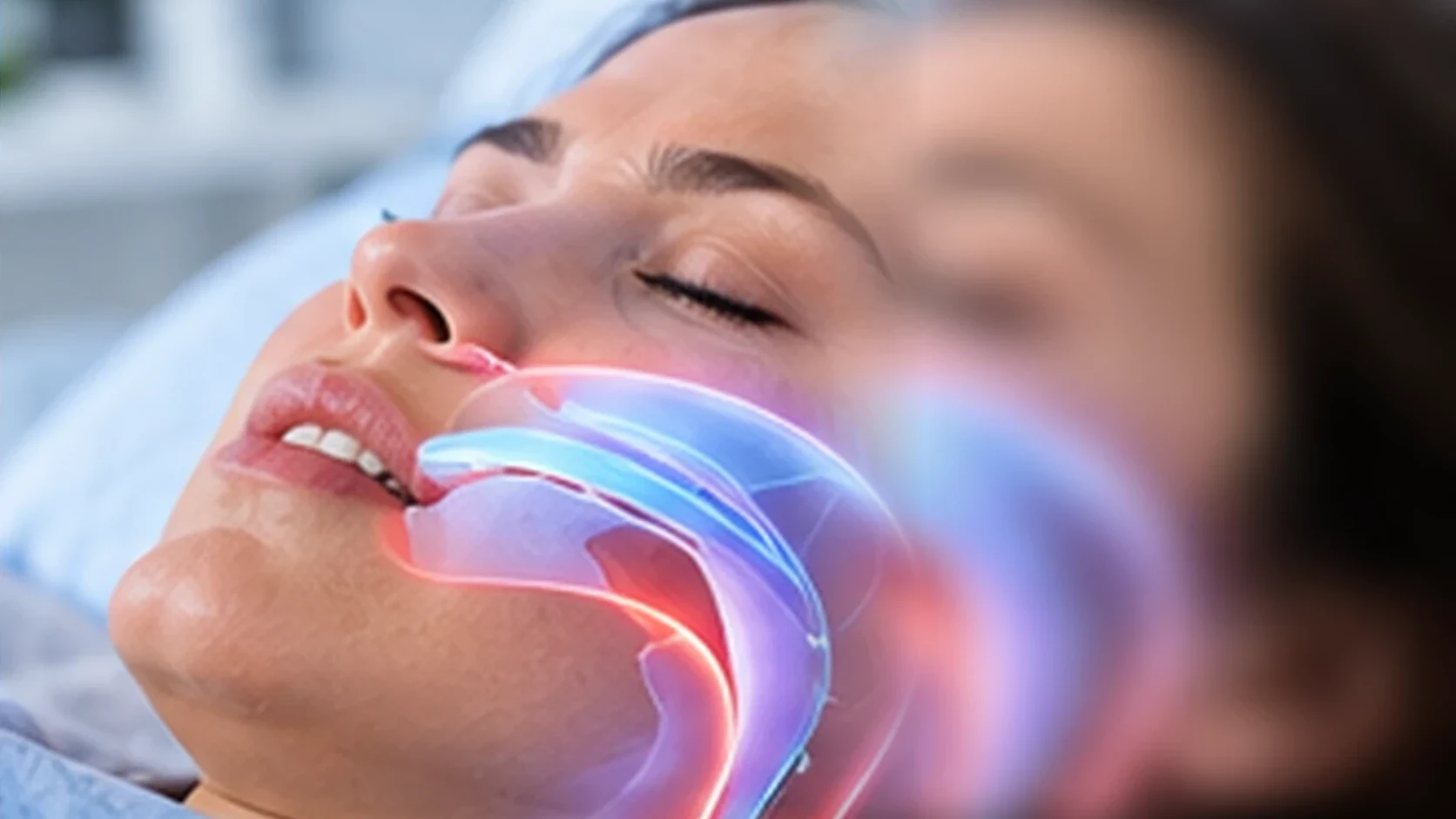
“Sleep-disordered breathing” describes a spectrum of abnormal breathing during sleep.
At one end may be primary snoring. At the other is obstructive sleep apnea with repeated airway obstruction and measurable physiologic effects. Between them are patients whose breathing is restricted enough to disturb sleep even when they do not fit a simple label.
Because the consequences and treatment choices differ, our role is to screen carefully, recognize when medical testing is needed and provide dental treatment only where it fits.
SIGNS THAT DESERVE ATTENTION
Sleep and daytime patterns that may warrant screening
Loud habitual snoring
Frequent loud snoring is a reason to ask more questions, especially when it is new or worsening.
Witnessed breathing pauses
Pauses, gasping or choking during sleep increase concern for obstructive sleep apnea.
Mouth breathing or dry mouth
Nighttime mouth breathing can reflect nasal, airway or habit-related factors and may contribute to dry mouth.
Restless or fragmented sleep
Frequent movement, awakenings or unrefreshing sleep may accompany breathing problems but are not specific by themselves.
Daytime sleepiness or fatigue
Poorly restorative sleep can affect energy, concentration and safety, particularly in adults.
Growth or pediatric concerns
In children, snoring or mouth breathing can intersect with tonsils, nasal obstruction, craniofacial growth and behavior, so medical and dental evaluation may need to be coordinated.
The airway cannot be managed by one profession in isolation.
Dentists can identify risk and provide useful treatment in selected cases, but medical diagnosis, ENT evaluation, sleep testing, orthodontic planning or other care may be needed depending on the patient.
A COORDINATED AIRWAY ASSESSMENT
What determines the next step
We review sleep symptoms, medical history, oral and craniofacial anatomy, nasal-breathing concerns, dental health, jaw function and prior sleep testing. Adults with suspected OSA may need medical sleep testing; children with persistent snoring or mouth breathing may need pediatric or ENT evaluation.
Symptoms that should not be treated as “just snoring”
- Witnessed apnea, gasping or choking
- Marked daytime sleepiness or falling asleep unintentionally
- Morning headaches with other OSA risk factors
- Persistent pediatric snoring or mouth breathing
- Symptoms that worsen despite prior dental or snoring treatment
FROM SCREENING TO THE RIGHT PATH
How treatment is organized
01 — Screen
Identify symptoms, risk factors and oral findings that suggest a sleep-related breathing problem.
02 — Diagnose appropriately
Coordinate sleep testing or medical/ENT evaluation when the condition cannot be safely defined by dental examination alone.
03 — Select treatment
Depending on diagnosis, options may include CPAP, oral appliance therapy—including mandibular advancement devices (MADs) and selected Vivos DNA, mRNA, mmRNA, CARE or Guide appliances—ENT treatment, orthodontic care, behavioral changes or selected adjunctive laser treatment.
04 — Reassess
Symptoms and objective findings are reviewed after treatment because airway conditions and treatment response can change over time.
LONG-TERM MANAGEMENT
Sleep-breathing care changes as the patient changes
Recheck persistent symptoms
Ongoing snoring, fatigue or breathing pauses deserve reevaluation even after treatment starts.
Monitor dental side effects
Oral appliances can affect the jaw or bite and require periodic dental follow-up.
Update medical information
Weight, medications, nasal health and other medical changes can alter sleep-breathing risk.
Coordinate growing patients
Children and adolescents may need changing plans as the airway, jaws and dentition develop.
INSURANCE & FINANCIAL PLANNING
Know the plan before treatment begins.
We accept your insurance and will help you maximize your benefits. Coverage varies by plan, diagnosis and procedure. Our team can review expected fees, available benefits and payment or financing options before treatment begins.
Treatment recommendations are based on clinical need, not on whether a particular service is covered.
CARE CLOSE TO HOME
Choose the Bright Smiles location that works best for you.
Specific provider, technology and appointment availability can be confirmed when you schedule.
Lawrenceville
845 Scenic Hwy S, Suite 300, Lawrenceville, GA 30046
Dawsonville
78 Dawson Village Way N, Suite 170, Dawsonville, GA 30534
START WITH AN EVALUATION
Talk with Bright Smiles about sleep-disordered breathing treatment.
Use the location links to schedule directly. The appropriate treatment is confirmed only after clinical evaluation.
Submitting an online booking request starts the scheduling process; treatment recommendations are made after evaluation.
FREQUENTLY ASKED QUESTIONS
Sleep-Disordered Breathing Treatment questions patients ask
The right treatment depends on the individual diagnosis and clinical findings.
What is sleep-disordered breathing?
It is a broad term for abnormal breathing patterns during sleep, ranging from snoring and increased airway resistance to obstructive sleep apnea.
Can a dentist screen for airway problems?
Yes. Dentists can ask about symptoms and recognize oral or craniofacial findings associated with airway risk, but screening does not replace medical diagnosis when sleep apnea is suspected.
Can children have sleep apnea?
Yes. Pediatric sleep apnea and persistent snoring require age-appropriate medical evaluation because causes and treatment can differ from adults.
Is mouth breathing always an airway disorder?
No. Mouth breathing can have nasal, behavioral, anatomic or other causes and should be evaluated in context.
What is an oral appliance?
For adults with appropriate diagnoses, oral-appliance options can include mandibular advancement devices (MADs) and Vivos DNA, mRNA, mmRNA, CARE and Guide appliances. The appropriate device depends on the diagnosis, anatomy, treatment objective and medical sleep-care plan.
Can orthodontics help airway problems?
Orthodontic and craniofacial treatment can influence oral and jaw relationships in selected patients, but airway treatment goals must be individualized and should not be promised from tooth movement alone.
Where does NightLase fit?
NightLase may be considered for selected snoring cases or as an adjunct, but it is not a stand-alone cure for obstructive sleep apnea.
Do I need to see an ENT?
ENT evaluation may be useful when tonsils, adenoids, nasal obstruction or other upper-airway anatomy appears relevant.
Can weight affect sleep-disordered breathing?
Yes. Weight is one of several factors that can affect upper-airway collapsibility and OSA risk, but thin patients can also have sleep apnea.
Does insurance cover treatment?
Coverage depends on the diagnosis, service and whether medical or dental benefits apply. We accept your insurance and will help you maximize available benefits where applicable.
BRIGHT SMILES DENTISTRY & ORTHODONTICS
If snoring, mouth breathing or restless sleep is raising questions, the next step is to define the problem clearly enough that the treatment matches the diagnosis.
Serving Cumming, Lawrenceville and Dawsonville, Georgia.