




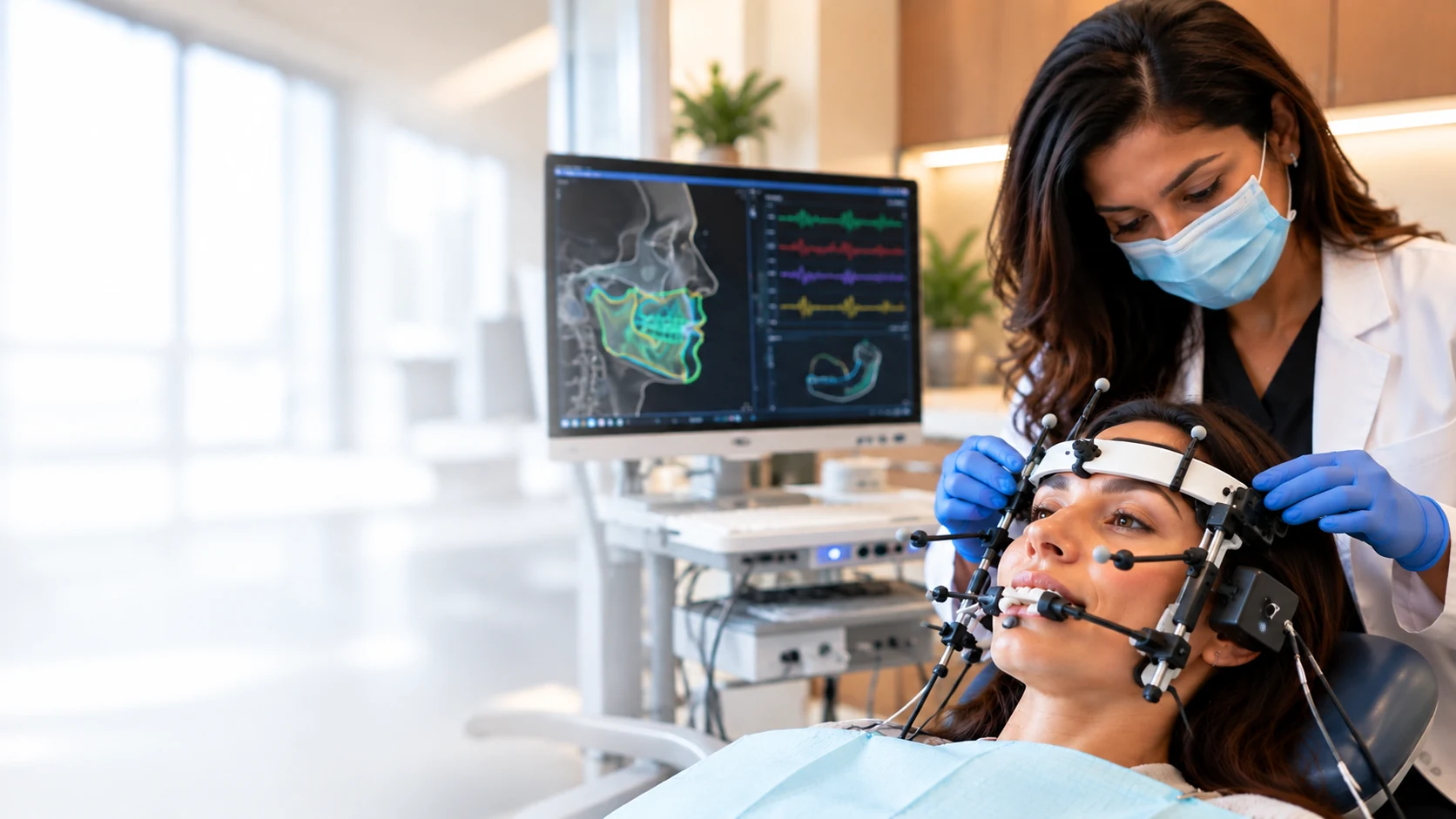

What is a neuromuscular bite registration?
It is a record of a jaw position captured after a clinical process intended to reduce muscle tension and evaluate function. It is interpreted together with the rest of the examination.
Why use TENS first?
TENS may help relax chewing muscles in selected patients so the clinician can compare the habitual bite with a more relaxed functional position.
Does the recorded position become my permanent bite?
Not automatically. The record may guide a reversible orthotic trial. Response to that trial is evaluated before any permanent treatment is considered.

What is the orthotic for?
The appliance can be used to test whether changing tooth contacts and jaw position reduces symptoms or improves function in an appropriate case.
A RECORD IS INFORMATION—NOT A VERDICT
Neuromuscular records are most useful when they answer a specific clinical question.
Jaw muscles can adapt to pain, clenching, dental changes and long-standing bite patterns. In selected cases, relaxing the muscles and recording how the jaw closes can provide additional information about a possible functional relationship.
We combine that information with symptoms, joint findings, muscle tenderness, range of motion, dental health and the patient’s response to reversible treatment.
WHEN THIS WORKFLOW MAY HELP
Situations where a neuromuscular bite record may add useful information
Muscle-dominant jaw pain
A patient with significant chewing-muscle tenderness or fatigue may benefit from comparing the habitual bite with a relaxed muscle position.
Unstable bite sensation
When the bite feels inconsistent or difficult to reproduce, a controlled registration may help clarify the pattern.
Orthotic planning
A bite record can help design a removable appliance intended to test a therapeutic jaw position.
Complex restorative planning
In selected cases with extensive dental rehabilitation, jaw position and muscle comfort may need to be considered before definitive restorative work.
TMJ treatment reassessment
Changes in symptoms while wearing an orthotic can provide additional information about whether the treatment concept is helping.
Cases needing objective comparison
Repeatable records can help compare jaw position and muscle response over time when they are clinically relevant.
Reversible before irreversible.
A neuromuscular record can support a reversible orthotic trial. It should not be used by itself to justify grinding teeth, extensive restorations or permanent bite changes.
THE WHOLE EXAM STILL MATTERS
What is evaluated alongside the bite registration
The clinician reviews joint symptoms, muscle tenderness, opening and movement, tooth contacts, tooth wear, periodontal health, existing restorations, habits, pain history and relevant imaging. TENS or other neuromuscular measurements are added only when they are expected to improve the clinical picture.
Situations that may need a different first step
- Acute dental infection or tooth-specific pain
- Recent significant trauma
- Jaw locking or severe limitation of opening
- Progressive numbness or neurologic symptoms
- Symptoms requiring medical or specialist evaluation
HOW THE RECORD IS USED
From muscle relaxation to an orthotic trial
01 — Clinical assessment
Identify the symptoms and determine whether a neuromuscular workflow is appropriate.
02 — Muscle relaxation when indicated
TENS may be used to reduce muscle tension before recording jaw position.
03 — Bite registration
A repeatable jaw relationship is recorded and reviewed in the context of the full examination.
04 — Orthotic and reassessment
A removable orthotic may be fabricated. Symptoms, function and bite are then reassessed before any longer-term decision.
DURING THE ORTHOTIC TRIAL
What makes the trial clinically useful
Follow the prescribed wear schedule
The appliance may be intended for specific times of day or a broader wear schedule depending on the treatment goal.
Report new bite changes
A temporary change in how the teeth meet can occur after appliance wear; persistent changes should be evaluated.
Track function, not just pain score
Opening, chewing comfort, headaches, muscle tenderness and sleep-related symptoms can all help assess response.
Do not assume success requires permanent dentistry
Improvement in a removable appliance is useful information, but any permanent next step requires separate diagnosis and informed decision-making.
INSURANCE & FINANCIAL PLANNING
Know the plan before treatment begins.
We accept your insurance and will help you maximize your benefits. Coverage varies by plan, diagnosis and procedure. Our team can review expected fees, available benefits and payment or financing options before treatment begins.
Treatment recommendations are based on clinical need, not on whether a particular service is covered.
CARE CLOSE TO HOME
Choose the Bright Smiles location that works best for you.
Specific provider, technology and appointment availability can be confirmed when you schedule.
Lawrenceville
845 Scenic Hwy S, Suite 300, Lawrenceville, GA 30046
Dawsonville
78 Dawson Village Way N, Suite 170, Dawsonville, GA 30534
START WITH AN EVALUATION
Talk with Bright Smiles about neuromuscular bite registration & orthotic.
Use the location links to schedule directly. The appropriate treatment is confirmed only after clinical evaluation.
Submitting an online booking request starts the scheduling process; treatment recommendations are made after evaluation.
FREQUENTLY ASKED QUESTIONS
Neuromuscular Bite Registration & Orthotic questions patients ask
The right treatment depends on the individual diagnosis and clinical findings.
What does “neuromuscular dentistry” mean here?
It refers to evaluating the relationship among jaw muscles, jaw position and tooth contacts as one part of diagnosis and treatment planning.
What is TENS?
Transcutaneous electrical nerve stimulation delivers mild electrical impulses through surface electrodes. In dental applications it may be used to relax jaw muscles or as part of a functional assessment.
Is the TENS position automatically the ideal bite?
No. A measured or recorded position must be interpreted clinically. There is no single device reading that replaces the rest of the diagnosis.
Will I need an orthotic after the bite registration?
Only if the findings and treatment goal support a reversible appliance trial.
Can an orthotic help headaches?
Some headaches can be associated with jaw-muscle tension, but headaches have many causes. Improvement is not guaranteed and non-dental causes should be evaluated appropriately.
Will my teeth be adjusted to match the orthotic position?
Not as an automatic next step. Permanent changes require a separate decision based on symptoms, function, dental condition, risks and alternatives.
How long is an orthotic trial?
The duration varies with the diagnosis and response. Follow-up visits are used to decide whether the appliance should be adjusted, continued, reduced or discontinued.
Can this be used before full-mouth restorative treatment?
In selected complex restorative cases, reversible functional records may help inform planning, but they are only one part of comprehensive diagnosis.
Is this the same as a night guard?
Not necessarily. A night guard often focuses on protecting teeth, while a therapeutic orthotic may be designed around a specific functional or diagnostic goal.
Does insurance cover neuromuscular records or an orthotic?
Benefits vary. We accept your insurance and will help you maximize your benefits while explaining expected patient responsibility before treatment.
BRIGHT SMILES DENTISTRY & ORTHODONTICS
If your jaw feels tense, painful or unstable and a conventional one-size-fits-all guard has not answered the question, a more detailed functional evaluation may help clarify the next step.
Serving Cumming, Lawrenceville and Dawsonville, Georgia.